
Glock Manual Safety: A Comprehensive Guide (Updated 05/04/2026)
Glock pistols, renowned for their simplicity, traditionally eschew manual safeties, relying instead on a three-part system. However, aftermarket options like the Siderlock
kit offer users an added layer of control and peace of mind, addressing concerns about accidental discharge and safe storage practices.
Glock pistols have established a reputation for safety, primarily through a design philosophy centered around three core, automatically engaged mechanisms. These aren’t traditional “safeties” in the sense of a manual lever, but rather features intrinsically linked to the operation of the firearm. The debate surrounding Glock safety often revolves around the absence of a manual safety – a feature common in many other pistol designs.
Many users, particularly those transitioning from other platforms, express a desire for the tactile reassurance of a manual safety. This stems from a belief that it provides an additional barrier against negligent discharge. However, Glock’s engineers argue that the inherent safety features, coupled with proper training and responsible handling, render a manual safety unnecessary. The core argument centers on the idea that relying on multiple, automatically functioning safeties is a more robust and reliable system than one dependent on the user’s consistent engagement of a manual control.
Despite this, the demand for aftermarket manual safety options persists, indicating a continued desire among some shooters for this feature.
The Debate: Manual Safety vs. Glock’s Built-in Safeties
The core of the discussion regarding Glock safety lies in contrasting the perceived benefits of a manual safety against the effectiveness of Glock’s integrated system. Proponents of manual safeties emphasize an added layer of control, particularly during storage or when carrying, believing it mitigates risk even in scenarios involving compromised grip or accidental contact. They desire the physical confirmation a manual safety provides.
Conversely, those defending Glock’s design highlight the potential for human error with manual safeties – forgetting to disengage before firing, or inadvertently engaging during critical moments. They argue that Glock’s three internal safeties – trigger, firing pin, and drop – are consistently active, requiring deliberate action (trigger pull) to disengage, making unintentional discharge exceedingly difficult.
The debate isn’t about which system is inherently “better,” but rather about differing philosophies regarding risk mitigation and user responsibility. Ultimately, the choice often comes down to personal preference and comfort level.
Understanding Glock’s Three Core Safety Features
Glock pistols are engineered with three independent, automatic safety mechanisms working in concert to prevent accidental discharge. The trigger safety, a unique lever integrated into the trigger itself, must be depressed while the trigger is pulled, physically blocking the trigger from moving unless intentional pressure is applied. This prevents unintentional activation from a simple bump or drop.
The firing pin safety system utilizes a spring-loaded locking pin that prevents the firing pin from moving forward unless the trigger is fully and deliberately pulled. This safeguards against discharge even if the pistol experiences a significant impact. Finally, the drop safety feature ensures the pistol won’t fire if dropped, even onto its impact point, by preventing the firing pin from reaching the primer.
These safeties are sequentially disengaged only when the trigger is pulled, offering a robust and reliable safety system without requiring external manipulation.
Trigger Safety Mechanism Explained
The Glock trigger safety is a distinct feature, a small lever positioned on the face of the trigger. It’s not a simple on/off switch, but rather requires conscious effort to disengage. This lever must be actively depressed by the shooter’s finger simultaneously with the trigger pull for the pistol to fire.
Without this deliberate inward pressure on the safety lever, the trigger cannot move rearward, even if force is applied. This design prevents accidental discharge from bumps, drops, or unauthorized use. It’s a crucial component of Glock’s safety philosophy, demanding intentional action for every shot.
The system’s effectiveness lies in its integration; it’s not an add-on, but a fundamental part of the trigger’s function, ensuring a layered safety approach. This mechanism is a key reason why many trust Glock’s inherent safety features.
Firing Pin Safety System Details
Glock’s firing pin safety is an internal mechanical locking system. It consists of a spring-loaded, rectangular block positioned between the firing pin and the striker channel. This block physically prevents the firing pin from moving forward unless specifically released by the trigger mechanism.

Unlike some designs, the firing pin safety isn’t directly controlled by the grip or an external lever. Instead, it’s disengaged only when the trigger is pulled, and the trigger safety is simultaneously depressed. This ensures that the firing pin remains locked even if the pistol is dropped or experiences a significant impact.
The system’s reliability stems from its simplicity and robust construction. It’s a passive safety, meaning it requires no active manipulation beyond the trigger pull, contributing to the Glock’s reputation for dependable operation and inherent safety.
Drop Safety Features and Functionality
Glock’s drop safety mechanism is integral to its overall safety design, preventing unintended discharge if the pistol is dropped from any height. This feature relies on a unique interaction between the slide, frame, and firing pin channel.
Upon impact, the slide is designed to move rearward slightly. This movement, however, doesn’t generate enough force to overcome the resistance of the firing pin safety system. The firing pin remains securely blocked, even during a substantial fall, because of the internal locking mechanism described previously.
This system operates independently of the grip angle or any external safeties, providing consistent protection regardless of how the pistol lands. It’s a passive safety, meaning it requires no user intervention and functions automatically, bolstering the Glock’s reputation for reliability and user safety.
Why Glocks Traditionally Lack Manual Safeties
Glock’s foundational philosophy centers on simplicity and a reliance on inherent safety mechanisms rather than user-operated controls like manual safeties. Gaston Glock believed that adding external safeties could introduce points of failure and potentially hinder rapid deployment in critical situations.

The design prioritizes a system where the pistol is safe as long as the trigger isn’t intentionally pulled; This approach minimizes the need for users to remember to disengage a safety during stress, a common concern in self-defense scenarios. The three core safeties – trigger, firing pin, and drop – work in sequence to prevent accidental discharge.
Furthermore, Glock’s engineers argued that a manual safety could create a false sense of security, potentially leading to negligent handling practices. The focus remains on responsible gun handling and user awareness as the primary safety measures.
The Argument for Relying on Glock’s Design
Proponents of Glock’s original design emphasize the effectiveness of its three integrated safety features: trigger, firing pin, and drop safety. These systems sequentially disengage only when the trigger is deliberately pulled, minimizing the risk of unintended discharge. This inherent safety is considered a significant advantage, particularly in high-stress situations.
The argument rests on the premise that relying on these built-in safeties, coupled with diligent training and responsible gun handling, provides a higher margin of safety than introducing a manual control. Removing the need to manipulate an additional safety feature streamlines the draw and firing process.
Experienced shooters and law enforcement professionals often attest to the reliability and effectiveness of Glock’s safety system, highlighting its proven track record over decades of use. Common sense storage and chamber verification are also key.
Addressing Common Concerns About Accidental Discharge
Concerns regarding accidental discharge with Glocks often stem from a misunderstanding of the firearm’s mechanics and a lack of proper training. While Glocks don’t have a manual safety, the integrated safety systems – trigger, firing pin, and drop safety – are designed to prevent unintentional firing.
However, the absence of a visible safety can create anxiety for some shooters. These concerns are often mitigated through comprehensive training emphasizing proper finger discipline, muzzle awareness, and safe handling procedures. Responsible storage, removing the magazine and clearing the chamber, is also crucial.
The debate frequently centers on the human factor; the most important safety is a well-trained mind. Aftermarket safeties address these anxieties, but the core principle remains responsible firearm handling.
Aftermarket Manual Safety Options for Glocks
For Glock owners desiring an external manual safety, several aftermarket options exist, primarily in the form of trigger kits. Siderlock is a prominent example, offering a safety trigger kit compatible with Glock Generations 1-4, including popular models like the 17, 19, and 26. These kits replace the standard trigger with one incorporating a manual safety lever.
Other available modifications, though less common, may involve frame modifications or specialized trigger components. It’s crucial to research thoroughly and select reputable brands to ensure quality and reliability. These modifications aim to provide an additional layer of security, appealing to users who prefer a traditional safety mechanism.
However, potential impacts on trigger pull and operation must be considered before installation.
Siderlock Safety Trigger Kit: Overview
The Siderlock Safety Trigger Kit represents a popular aftermarket solution for Glock owners seeking a manual safety. Designed for compatibility across Glock Generations 1-4, encompassing a wide range of models – from the 17 and 19 to the 20, 21, and even the 42 – it offers broad applicability;
This kit functions by replacing the factory trigger with a modified unit featuring an integrated safety lever. Users must intentionally disengage this lever as part of the trigger pull, adding an extra step to prevent unintentional discharge. The kit aims to bridge the gap for those accustomed to traditional safety mechanisms, providing a familiar control element on a Glock platform.
NDZ Performance distributes the Siderlock kit, emphasizing its ability to work alongside Glock’s existing safety features.
Other Available Manual Safety Kits and Modifications
Beyond the Siderlock, the aftermarket presents several alternative options for introducing a manual safety to Glock pistols. While Siderlock remains a prominent choice, other manufacturers offer similar trigger-based safety systems, each with slight variations in design and installation complexity.
These modifications generally follow the same principle: replacing the factory trigger with a unit incorporating a physical safety lever that must be deliberately deactivated during the trigger pull. Some kits focus on providing a more traditional “1911-style” grip safety addition, though these are less common and often require more extensive gunsmithing.
Researching specific kits is crucial, considering factors like compatibility with your Glock generation and caliber, installation difficulty, and potential impact on trigger pull characteristics. User reviews and professional gunsmith opinions are invaluable resources when evaluating these options.
Installation Considerations for Aftermarket Safeties
Installing an aftermarket manual safety on a Glock is generally not a simple task and often requires a high degree of gunsmithing skill. Most kits involve replacing the factory trigger, demanding precise fitting and adjustment to ensure proper function and prevent interference with other components.
Professional installation is strongly recommended, especially for those unfamiliar with Glock disassembly and reassembly. Incorrect installation can lead to malfunctions, including accidental discharges or the inability to fire the weapon. Thoroughly test the firearm after installation.
Carefully follow the manufacturer’s instructions and utilize appropriate tools. Be mindful of potential impacts on the trigger pull weight and reset distance. Always prioritize safety during the installation process, ensuring the firearm is unloaded and a safe direction is maintained.
Potential Impact of Manual Safeties on Glock Operation
Adding a manual safety to a Glock can subtly alter its operational characteristics. A common consequence is an increase in trigger pull weight, as the safety mechanism adds resistance. This can affect shooting accuracy and require adjustment for experienced Glock users.
The trigger reset – the distance the trigger must travel after firing to be ready for the next shot – may also be affected, potentially slowing down follow-up shots. Furthermore, some aftermarket safeties can interfere with holstering, particularly with tight-fitting holsters designed specifically for standard Glocks.
It’s crucial to test compatibility with your preferred holster and practice drawing and firing with the modified Glock to ensure smooth and reliable operation. Consider the trade-offs between added safety and potential performance changes.
Effect on Trigger Pull and Reset

Introducing a manual safety to a Glock pistol invariably impacts the trigger experience. Expect a noticeable increase in trigger pull weight; the added mechanism requires overcoming additional resistance before the firing sequence begins. This change demands adaptation for shooters accustomed to the standard Glock trigger.
Beyond pull weight, the trigger reset distance can also be altered. Some aftermarket safety systems lengthen the reset, meaning the trigger travels further after a shot before being ready for the next. This extended reset can potentially slow down follow-up shot speed and require focused practice to maintain proficiency.
The degree of change varies depending on the specific safety kit installed, emphasizing the importance of thorough testing and familiarization with the modified firearm.
Possible Interference with Holstering

Adding an aftermarket manual safety to a Glock can introduce challenges with holstering, particularly with holsters designed specifically for standard, safety-free Glocks. The added safety lever, typically located on the frame, may create friction or a tight fit, hindering a smooth and reliable draw.
This interference can range from a slightly slower draw time to a complete inability to holster or unholster the firearm safely. Retention holsters, which actively secure the pistol, are especially prone to issues due to the added obstruction.
It’s crucial to verify holster compatibility before installing a manual safety. Seek out holsters specifically designed to accommodate Glocks with aftermarket safeties, or be prepared to invest in new holstering gear to ensure safe and efficient operation.
Safe Storage Practices for Glocks
Regardless of whether a Glock has a manual safety installed, adhering to robust safe storage practices remains paramount. The core principle is preventing unauthorized access, especially by children or individuals prohibited from possessing firearms.
Even with a manual safety, never store a loaded firearm. Always remove the magazine and clear the chamber before storing. Utilize a gun safe, lock box, or trigger lock to physically secure the pistol. These methods add layers of protection, mitigating risks associated with accidental access.
Remember, a manual safety isn’t a substitute for responsible storage. It’s an additional feature, not a sole safeguard. Consistent adherence to safe handling and storage protocols, combined with responsible ownership, is essential for preventing tragedies.
Proper Handling Procedures: The Foundation of Glock Safety
Regardless of whether your Glock features an aftermarket manual safety, mastering fundamental handling procedures is crucial. Treat every firearm as if it’s loaded, maintaining constant awareness of muzzle direction and potential targets.
Always keep your finger off the trigger until you’ve made a conscious decision to fire. This principle, combined with maintaining a firm grip and proper stance, minimizes the risk of accidental discharge. If a manual safety is present, understand its operation and consistently engage it when not actively aiming.

Regularly review and practice these procedures. Safe handling isn’t a one-time lesson; it’s a continuous commitment. Remember, the most important safety is a well-trained mind and disciplined habits, even with added mechanical safeties.
Clearing a Glock: A Step-by-Step Guide
Regardless of manual safety presence, consistently clearing your Glock is paramount for safe storage and maintenance. First, remove the magazine, ensuring an empty well. Then, lock the slide to the rear and visually and physically inspect the chamber to confirm it’s empty.
If a manual safety is installed, ensure it’s engaged during this process. After verifying an empty chamber, release the slide carefully, maintaining control. Repeat the visual and physical check. This double-check is vital.
Remember, even with Glock’s inherent safeties, or an added manual one, this procedure is non-negotiable. Always point the firearm in a safe direction during the entire process. Proper clearing builds confidence and prevents accidental discharges.
Glock Safety Rules: A Recap
Fundamental Glock safety transcends the presence of a manual safety; user responsibility remains key. Always treat every Glock as if it’s loaded, maintaining a conscious awareness of its potential. Never point the muzzle at anything you aren’t willing to destroy, regardless of safety mechanisms.
Keep your finger off the trigger until your sights are on the target and you’ve made the conscious decision to fire. If installing an aftermarket manual safety, understand its operation and practice engaging/disengaging it consistently.
Be certain of your target and what’s beyond it. Store your Glock unloaded, preferably in a secure location. Regularly review these rules and seek professional training to reinforce safe handling practices. Remember, common sense is the ultimate safety.
Legal Considerations Regarding Aftermarket Safeties
Installing aftermarket manual safeties on Glocks introduces potential legal complexities. While generally permissible under federal law, state and local regulations vary significantly. Some jurisdictions may have restrictions on modifications that alter a firearm’s original design or function.
It’s crucial to research and understand the laws in your specific location before installing any aftermarket parts. Modifications could potentially impact the legality of carrying the firearm, especially in concealed carry contexts;
Furthermore, alterations might void any manufacturer’s warranty. Documentation of the modification and proof of professional installation could be beneficial. Always prioritize compliance with all applicable laws and regulations to avoid legal repercussions.
Training and Education for Safe Glock Use
Comprehensive training is paramount for safe Glock operation, particularly when incorporating aftermarket manual safeties. Familiarity with the firearm’s mechanics, including the added safety, is essential. Courses should cover proper manipulation, safe handling procedures, and consistent application of the safety mechanism.
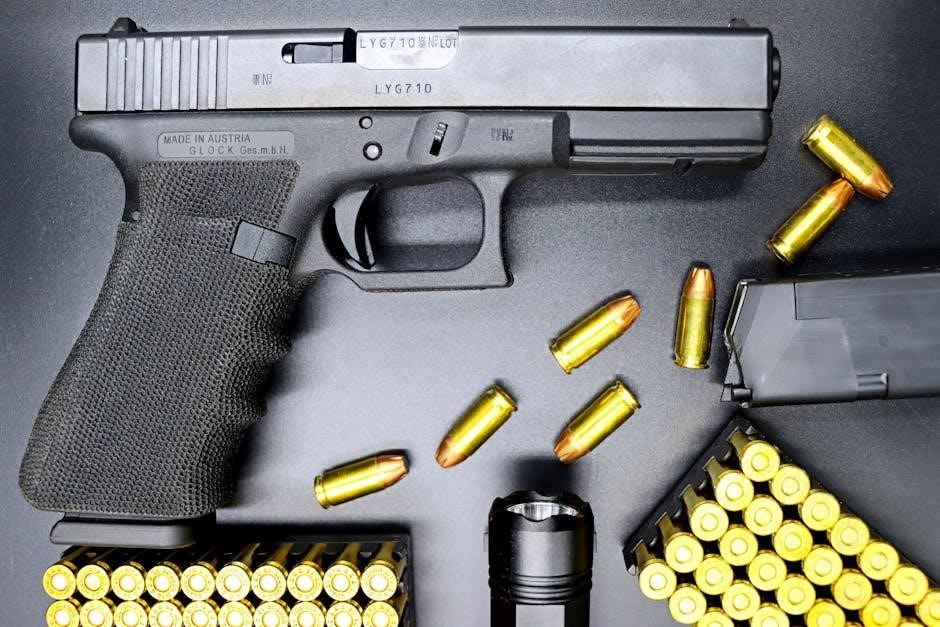
Dry-fire practice reinforces muscle memory and safe habits. Emphasize the importance of maintaining situational awareness and responsible gun handling. Understanding the Glock’s core safety features – trigger, firing pin, and drop safety – alongside the manual safety, builds a robust safety mindset.
Regular refresher courses and continued education ensure proficiency and adherence to best practices. Prioritize professional instruction from certified trainers to maximize safety and competence.
The Role of User Responsibility in Glock Safety
Ultimately, Glock safety, even with aftermarket manual safeties, hinges on unwavering user responsibility. The firearm is a tool, and its safe operation demands diligent adherence to established safety rules. No mechanical safety can replace a disciplined mindset and consistent safe practices.
Users must prioritize secure storage, removing the magazine and clearing the chamber when not in use, as basic common sense dictates. Regular inspection of the firearm and any added safety mechanisms is crucial. Understanding the potential impact of a manual safety on trigger pull and holstering is vital.
Continuous education, coupled with a commitment to responsible gun ownership, forms the bedrock of Glock safety. The “most important safety is your brain,” demanding constant vigilance and informed decision-making.
Comparing Glock Safety to Other Pistol Designs
Compared to many traditional pistol designs, Glocks diverge by omitting a manual safety lever. Many other firearms incorporate external safeties, requiring deliberate action to disengage before firing. This contrasts with Glock’s reliance on its three internal safeties – trigger, firing pin, and drop safety – which are deactivated sequentially during the trigger pull.
Some argue this simplicity enhances speed and reliability, particularly in high-stress situations. However, others prefer the added control offered by a manual safety, providing a visible and tactile confirmation of the firearm’s status. Aftermarket options aim to bridge this gap for Glock owners desiring that feature.
Ultimately, the “safest” design is subjective, depending on user preference, training, and adherence to safe handling procedures. Glocks are considered inherently safe by many, but user responsibility remains paramount.

Common Misconceptions About Glock Safety
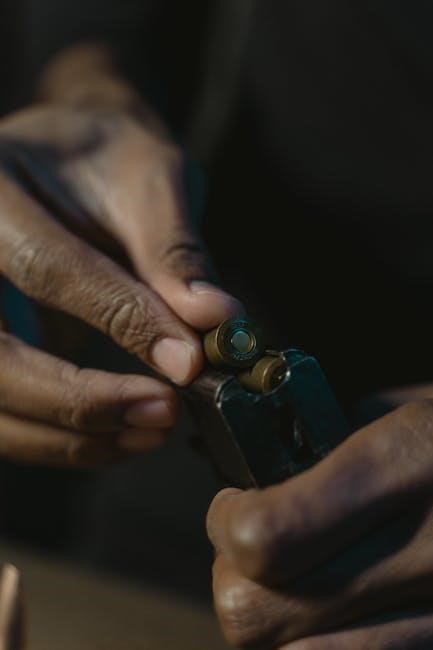
A prevalent misconception is that Glocks are “unsafe” due to the lack of a manual safety. This stems from a misunderstanding of the firearm’s design; Glock’s three internal safeties actively prevent accidental discharge when not intentionally operated. Another myth suggests adding an aftermarket safety makes a Glock unequivocally safer, ignoring the potential for user error during installation or operation.
Furthermore, some believe a manual safety eliminates the need for diligent safe handling practices. This is demonstrably false – responsible gun ownership, including proper storage and awareness, remains crucial. The idea that Glocks are prone to accidental discharge is also largely unfounded, with statistics showing a low incidence rate when proper procedures are followed.
Ultimately, safety isn’t inherent in a firearm, but in the user’s knowledge and discipline;
Resources for Further Glock Safety Information
For comprehensive Glock safety training, consider courses offered by the National Rifle Association (NRA) and US Concealed Carry Association (USCCA). These organizations provide hands-on instruction covering safe handling, storage, and operation. Glock’s official website (us.glock.com) offers owner’s manuals and safety guidelines.
Online forums like the r/liberalgunowners subreddit (https://www.reddit.com/r/liberalgunowners/) provide community discussions on Glock safety, including experiences with aftermarket modifications. Quora (https://www.quora.com/) features Q&A sessions with firearm experts addressing common safety concerns.
NDZ Performance (https://ndzperformance.net/) provides detailed information on their Siderlock safety trigger kits, alongside installation guides and support. Always cross-reference information and prioritize certified training for optimal safety knowledge.

Enhancing Glock Safety – A Balanced Approach
Ultimately, Glock safety hinges on a balanced approach. While Glock’s inherent safety features – trigger, firing pin, and drop safety – are robust, the desire for a manual safety is understandable, offering an additional layer of control. Aftermarket options, like the Siderlock, cater to this preference, but require careful consideration.
Prioritizing consistent, diligent practice of safe handling procedures remains paramount. Proper storage, clearing the chamber, and maintaining situational awareness are non-negotiable.
The debate isn’t about whether Glocks are inherently unsafe, but about individual comfort levels and risk mitigation. Responsible gun ownership demands continuous learning, professional training, and a commitment to safe practices, regardless of modifications. A well-informed owner is the safest owner.