
Resistance band chest exercises are a versatile and accessible way to strengthen and develop chest muscles without heavy equipment. These exercises are ideal for improving muscle activation, strength, and range of motion. With their portability and cost-effectiveness, resistance bands offer a practical solution for fitness enthusiasts of all levels.
Benefits of Resistance Band Chest Exercises
Resistance band chest exercises offer a range of advantages for fitness enthusiasts. They provide adaptability, allowing users to adjust tension and target specific muscle groups effectively. Unlike traditional weights, resistance bands allow for smooth, controlled movements, reducing the risk of injury. These exercises promote muscle engagement and can be tailored to suit varying fitness levels. Additionally, resistance bands enable the incorporation of plyometric and eccentric training techniques, enhancing power and endurance. The portability and versatility of resistance bands make them ideal for home workouts,, or gym sessions. Regular practice helps improve upper body strength, range of motion, and overall chest development. By leveraging resistance bands, individuals can achieve a balanced and dynamic chest workout with minimal equipment, making them a valuable tool for anyone looking to build muscle and enhance performance.
Who Can Benefit from Resistance Band Chest Workouts?
Resistance band chest workouts are highly adaptable and cater to a wide range of individuals seeking chest muscle development. Athletes and fitness enthusiasts can incorporate these exercises into their training regimen to enhance strength and endurance. For bodybuilders, resistance bands offer a versatile way to build chest muscles without heavy equipment, making them an ideal complement to traditional weightlifting. Beginners will appreciate the user-friendly nature of resistance bands, which allow for gradual progression and reduced risk of injury compared to barbells or dumbbells. Additionally, these workouts are perfect for those looking to add variety to their routine, as they can be easily adjusted to target specific muscle groups or increase difficulty. Resistance band chest exercises are also beneficial for individuals focusing on recovery or rehabilitation, as they provide a low-impact alternative to conventional chest exercises. Whether you’re a seasoned athlete or just starting your fitness journey, resistance bands offer a flexible and effective solution for improving chest strength and mobility. Their portability and adaptability make them a valuable tool for anyone seeking to achieve their fitness goals.
Essential Equipment for Resistance Band Chest Training
Resistance band chest training requires a few key pieces of equipment to ensure effectiveness and safety. The primary tool is the resistance band itself, available in various tensions to accommodate different fitness levels and goals. Door anchors or sturdy furniture, such as a chair, serve as anchor points for secure and stable exercises. Some exercises may benefit from a mat for comfort or a stability ball for added support, though these are optional. Additionally, having bands of varying resistance levels allows for progressive overload, enabling you to gradually increase the intensity and challenge of your workouts. This essential equipment setup provides a versatile and safe environment for targeted chest muscle development. By using these tools effectively, you can achieve a comprehensive chest workout that enhances strength, endurance, and overall fitness.

Top Resistance Band Chest Exercises for Muscle Development
Resistance band chest exercises are effective for building strength and muscle definition. Key exercises include push-ups, chest presses, flyes, and pullovers. These workouts can be customized to target different areas of the chest and adapt to varying fitness levels. Incorporating resistance bands allows for versatile and progressive training to enhance chest strength and size.
Resistance Band Push-Ups
Resistance band push-ups are a dynamic exercise that effectively targets the chest muscles while engaging the triceps and shoulders. To perform this exercise, place the band under your feet or around a sturdy object, holding the ends in your hands. Maintain proper form by keeping your core tight and chest up throughout the movement. Lower your body in a controlled manner, focusing on squeezing the chest at the top of the movement. Variations such as incline or decline push-ups can further enhance muscle activation. Resistance bands allow for progressive overload by increasing tension as you improve strength. Incorporating this exercise into your routine can significantly boost chest development while improving overall upper body strength and stability. Remember to prioritize form to avoid injury and maximize results.
Resistance Band Chest Press
Resistance band chest press is a fundamental exercise for targeting the pectoralis major and minor muscles. To execute this exercise, anchor the band behind your back or secure it to a sturdy object at shoulder height. Hold the band ends with an overhand grip, engaging your core and maintaining a neutral spine. Press forward, squeezing your chest muscles at the top of the movement, and slowly return to the starting position. Full-body tension and controlled motion are key to maximizing effectiveness. Variations include incline or decline presses, allowing for balanced chest development. Resistance bands offer adjustable tension, making this exercise suitable for all fitness levels. Proper form ensures optimal muscle activation while minimizing the risk of injury, making resistance band chest press a cornerstone of chest workout routines.
Resistance Band Flyes
Resistance band flyes are an effective exercise for targeting the chest muscles, particularly the pectoralis major and minor, as well as the shoulders. To perform this exercise, anchor the resistance band overhead or secure it to a sturdy object above your head. Stand with your feet Shoulder-width apart, holding the band ends with an underhand grip. Rotate your palms forward and slightly upward, engaging your core to maintain stability. Slowly lower your arms out to the sides, feeling a stretch in your chest, then pull the band back to the starting position, squeezing your chest at the top. Focus on controlled movement and full-body tension to maximize muscle activation. Variations include incline or declined flyes, allowing for a balanced workout. Proper form is essential to prevent injury and ensure optimal results from resistance band flyes.
Resistance Band Pullover
Resistance band pullovers are a dynamic exercise that effectively targets the chest, back, and core muscles, promoting overall upper body strength and flexibility. To perform this movement, anchor the resistance band above your head or secure it to a sturdy structure. Hold the band ends with an overhand grip, slightly wider than shoulder-width apart. Begin with your arms fully extended above your head, then slowly lower the band behind your back, hinging at the hips and keeping your arms straight. Engage your core to maintain control as you pull the band back to the starting position, squeezing your chest and upper back muscles. The pullover works the pectoralis minor, latissimus dorsi, and shoulder muscles, making it a great addition to any chest workout. Focus on smooth, controlled movements and avoid rounding your shoulders to ensure proper form. This exercise can also be modified with variations like incline or declined pullovers for added intensity.
Resistance Band Chest Stretch
Resistance band chest stretches are an effective way to improve flexibility and relieve tightness in the chest muscles and surrounding areas. To perform this stretch, anchor one end of the band to a sturdy object at chest height. Hold the other end with your hands, keeping your arms slightly in front of your body. Gently pull the band away from the anchor point while maintaining control and keeping your back straight. Feel the stretch across your chest and shoulders, holding for 20-30 seconds. Repeat for the recommended number of sets. This stretch helps to enhance mobility, particularly for individuals who sit for long periods or participate in activities that tighten the chest muscles. Regular practice can also improve posture and reduce tension. For added intensity, you can adjust the resistance of the band or perform rotational stretches. Always ensure smooth movements and avoid overextending to maintain safety and effectiveness in your routine.
Resistance Band Incline Press
The resistance band incline press is an effective exercise for targeted upper chest development. To perform this exercise, place one end of the resistance band under your feet while lying on an incline bench or stability ball. Hold the band handles with your hands, positioning them slightly above shoulder height. Press the band outward, maintaining control throughout the movement, and return to the starting position. Focus on engaging your chest muscles and keeping your core tight. This exercise is ideal for improving strength and muscle activation in the upper chest while minimizing strain on the shoulders. Adjust the resistance of the band or alter the incline angle to tailor the difficulty to your fitness level. Incorporating controlled eccentric movements can further enhance muscle development. Always ensure proper form to maximize benefits and prevent injury during this exercise.
Resistance Band Eccentric Chest Press
The resistance band eccentric chest press is a specialized exercise designed to target muscle growth and strength by focusing on the eccentric (lowering) portion of the movement. To perform this exercise, secure the resistance band beneath your feet or a sturdy object, and grasp the handles with your hands slightly wider than shoulder-width apart. Initiate the movement by pressing your hands outward, then slowly lower the band toward your chest with controlled tension. The eccentric phase is where the majority of muscle activation occurs, so prioritize control and mindfulness during this phase. By emphasizing the eccentric component, you can enhance muscle development and improve chest strength without the need for heavy weights. Incorporate gradual progression by increasing resistance or incorporating pauses during the eccentric phase to further challenge your chest muscles. Always maintain proper form and avoid using excessive force to prevent injury. This exercise is an excellent addition to a resistance band chest routine, particularly for those seeking to optimize muscle activation and eccentric training benefits.

How to Set Up Resistance Band Chest Exercises

To begin, securely anchor your resistance band to a sturdy object or door anchor. Position the band at chest height for proper alignment. Adjust the tension by altering the band’s length to suit your strength level. Engage your core and maintain a neutral spine for optimal form. Ensure the band remains level with your shoulders throughout the exercise.
Anchoring the Resistance Band for Chest Workouts
Anchoring your resistance band correctly ensures stability and maximizes the effectiveness of chest exercises. Use a sturdy object, such as a door anchor or a secure piece of equipment, to attach the band. Position it at chest height to ensure proper alignment and muscle engagement during exercises.
Choose an anchor point that allows you to maintain tension without discomfort. Secure the band firmly to prevent slipping or loosening during workouts. Adjust the band’s length to customize resistance, ensuring the exercises challenge your muscles appropriately while maintaining control. Proper anchoring enhances performance and reduces the risk of injury, making it a critical step in effective chest training;
Proper Form and Alignment for Resistance Band Chest Exercises
Mastering proper form and alignment is crucial for effectiveness and safety during resistance band chest exercises. Ensure your posture is upright, with your shoulders pulled back and down, and your core engaged to stabilize your body. When performing exercises like chest presses or flyes, keep your elbows slightly tucked in to avoid shoulder strain and focus the effort on your chest muscles.
Control the movement by resisting the pull of the band throughout the exercise, maintaining tension without allowing the band to snap back uncontrollably. Align your hands at chest height or slightly above, depending on the exercise, to target the chest fibers effectively. Avoid rounding your shoulders or arching your back, as this can lead to poor muscle engagement or injury. Proper form ensures maximum chest activation while minimizing the risk of discomfort or strain;
Adjusting Resistance Band Tension for Chest Workouts
Adjusting resistance band tension is essential for optimizing chest workouts and preventing injury. Experiment with different band lengths by looping the band at varying heights—a higher anchor point increases tension, while a lower setup reduces it. For greater resistance, you can combine multiple bands or use thicker, more durable bands. Ensure the band is taut but not overly stretched to avoid discomfort or strain. Focus on maintaining proper form during each exercise by keeping your chest lifted and shoulders down to maximize muscle activation. Regularly assess and adjust tension to align with your fitness goals and strength progression, ensuring each workout challenges your chest effectively while maintaining safety and efficiency.

Tips for Effective Resistance Band Chest Workouts
To maximize the effectiveness of resistance band chest exercises, focus on controlled movements and proper form. Adjust tension by changing band length or combining bands for varied resistance. Incorporate chest stretches for flexibility and include eccentric emphasis for enhanced muscle engagement. Always warm up and cool down to prevent injury and optimize gains.
Maximizing Chest Activation with Resistance Bands
To maximize chest activation during resistance band chest exercises, focus on controlled movements and proper form. Engage your chest muscles by squeezing them at the top of each repetition and maintaining tension throughout. Experiment with different resistance levels by adjusting band tension or using multiple bands for added intensity. Incorporate a variety of exercises, such as the resistance band push-up, chest press, and flyes, to target different areas of the chest. Additionally, change your anchor points to alter the angle of pull, ensuring comprehensive muscle engagement. Emphasize both the concentric (lifting) and eccentric (lowering) phases of each movement to enhance activation. Finally, include compound movements that involve the chest, shoulders, and triceps to maximize overall chest development. Proper warm-up and stretching before and after workouts will further enhance muscle activation and reduce the risk of injury.
Incorporating Resistance Band Chest Workouts into a Full Routine
Incorporating resistance band chest workouts into a full fitness routine enhances overall chest development while providing versatility and convenience. Start by dedicating 30-45 minutes to chest-specific exercises, such as resistance band push-ups, chest presses, and flyes, to target different muscle fibers. Combine these with compound movements like squats or shoulder presses using resistance bands to engage multiple muscle groups. For a balanced routine, include upper body exercises that complement chest training, such as pull-ups or rows, followed by core work or leg exercises. Resistance bands are ideal for full-body workouts, allowing you to save time and maximize efficiency. Experiment with different resistance levels and anchoring points to keep your routine engaging and progressive. Incorporate these exercises into your training 2-3 times weekly, ensuring adequate rest and recovery to avoid overtraining. This approach not only strengthens the chest but also improves overall upper body strength and coordination. Additionally, resistance bands are perfect for travel or at-home workouts, making them a practical choice for maintaining a consistent fitness routine. By strategically integrating resistance band chest exercises into your plan, you can achieve a well-rounded fitness regimen tailored to your goals.
Combining Resistance Bands with Other Chest Training Methods
Resistance bands offer a versatile way to enhance traditional chest workouts by adding dynamic tension and variety. Pairing them with barbell presses increases resistance during the eccentric phase, promoting muscle activation. When used with dumbbells, looping bands around your wrists enhances resistance as you spread your arms, providing additional intensity. Incorporating bands into bodyweight exercises like push-ups allows for adjustable difficulty and targeted muscle engagement. By integrating bands into different workout phases, such as using them for warm-ups or mid-workout additions, you can effectively challenge your chest muscles. This combination not only boosts strength gains but also helps target various muscle fibers. Proper form and gradual resistance adjustment are key to maximizing benefits while avoiding plateaus. Combining methods ensures a comprehensive chest workout, optimizing muscle development and overall fitness.

Progressive Overload and Resistance Band Chest Training
Applying progressive overload with resistance bands enhances chest training. Gradually increase resistance by using thicker bands or adding reps, adjusting tension, and incorporating compound movements to continuously challenge and grow chest muscles.
Increasing Resistance Over Time for Chest Growth
Increasing resistance over time is essential for maximizing chest growth with resistance bands. Start by using thinner bands and gradually switch to thicker ones as you get stronger. Add repetitions or sets to progressive challenges. Adjusting anchor points or incorporating dynamic movements like plyometrics or tempo exercises can further stimulate muscle development. Consistency is key, and by systematically increasing resistance, you can effectively build strength and size in the chest muscles.
Gradually Building Chest Strength with Resistance Bands

Building chest strength with resistance bands requires a progressive approach. Start with foundational exercises like resistance band push-ups and chest presses, focusing on controlled movements and proper form. As you adapt, introduce more challenging exercises such as incline presses or flyes to target different chest muscles. Gradually increase resistance by using thicker bands or adding repetitions. Maintain consistency in your training, allowing adequate rest between sessions for muscle recovery. Patience and gradual progression are key to long-term strength gains. Incorporate tempo training or eccentric emphasis to further challenge your muscles. Resistance bands offer versatility, enabling you to perform a variety of exercises that enhance both muscular endurance and strength; By integrating these strategies into your routine, you can effectively develop robust chest strength over time.
Monitoring Progress in Resistance Band Chest Workouts
Tracking progress in resistance band chest workouts is essential to ensure continuous improvement. Begin by establishing a workout log to document exercises, repetitions, and resistance levels. Regularly assess your strength by gradually increasing the difficulty of your workouts, such as using thicker bands or incorporating more challenging variations. Videotape yourself performing exercises to analyze form and identify areas for improvement. Additionally, pay attention to subjective feedback like muscle fatigue and soreness to gauge progress. Resistance bands allow for versatility, enabling you to adjust tension and target different muscle groups effectively. By consistently monitoring your efforts and celebrating small milestones, you can stay motivated and ensure steady progress toward your chest strengthening goals.

Advanced Resistance Band Chest Training Techniques
Advanced resistance band chest training involves techniques like full-body workouts, plyometric exercises, and eccentric emphasis. These methods enhance strength, power, and muscle engagement. Incorporating varied angles, controlled movements, and progressive overload ensures continuous development and prevents plateaus in chest training.
- Full-body workouts integrate chest exercises with compound movements for balanced conditioning.
- Plyometric exercises add explosive power to chest workouts for enhanced performance.
- Eccentric emphasis focuses on slow, controlled lowering phases to maximize muscle activation and hypertrophy.
Full-Body Resistance Band Chest Workouts
Incorporating full-body resistance band chest workouts can enhance overall strength and mobility while targeting the chest effectively. These exercises often combine chest movements with engagement of the core, shoulders, and back, promoting better stability and muscle activation. For example, a chest press combined with a squat or hinge can create a dynamic, compound movement that challenges multiple muscle groups.
Full-body workouts using resistance bands are versatile, allowing for creativity in exercise design. They can be performed at home or outdoors, making them ideal for those seeking convenience and efficiency in their training. This approach not only builds chest strength but also improves coordination and balance, offering a holistic fitness outcome.
Plyometric Resistance Band Chest Exercises
Plyometric resistance band chest exercises combine explosive power with resistance, offering a dynamic way to enhance chest strength and mobility. These exercises focus on rapid muscle contractions and extensions, making them ideal for improving explosiveness and endurance in the chest muscles. Plyometric movements like jump presses or clap push-ups with added band tension can elevate your training intensity.
Resistance bands provide an ideal tool for plyometric exercises, allowing for controlled explosions of power while minimizing the risk of injury. Incorporating plyometric techniques into your routine can improve coordination, timing, and overall chest engagement. Whether performed standing, seated, or in a push-up position, these exercises challenge the chest muscles in new and exciting ways, making them a valuable addition to any workout regimen.
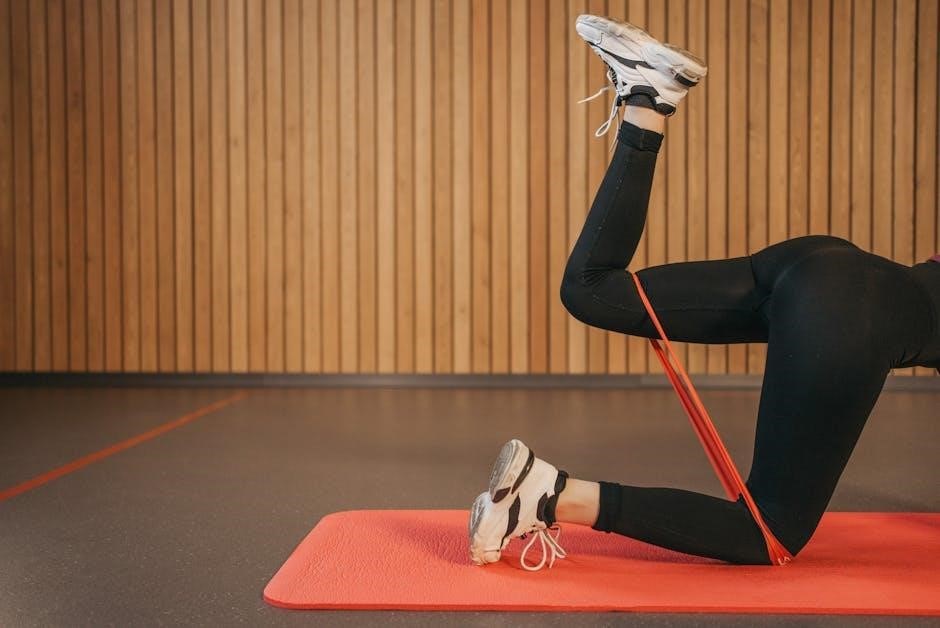
22.eccentric Emphasis in Resistance Band Chest Workouts
Eccentric training refers to the controlled lengthening phase of a muscle contraction, which occurs during the lowering portion of exercises. In resistance band chest workouts, emphasizing the eccentric phase enhances muscle engagement, growth, and strength. This approach involves slowing down the eccentric movement to increase time under tension, maximizing chest activation and improving muscle endurance.
Techniques like controlled lowering with resistance bands or incorporating pauses during the eccentric phase can effectively target the chest muscles. Eccentric training also promotes injury prevention by strengthening muscle fibers and tendons. However, it’s crucial to maintain proper form and avoid overexertion to prevent strain. By focusing on eccentric emphasis, you can achieve greater gains in chest development and overall fitness when using resistance bands.

Safety and Precautions for Resistance Band Chest Workouts
Focus on safety to avoid injuries during resistance band chest workouts. Start with a proper warm-up, maintain correct form, and avoid overstretching the band. Always use appropriate resistance and never compromise on technique to ensure a safe and effective workout.
Avoiding Common Injuries in Resistance Band Chest Training
Avoiding injuries during resistance band chest training is crucial. Always start with a proper warm-up to prepare your muscles and enhance flexibility. Focus on maintaining correct form throughout each exercise to prevent strain or overuse injuries. Avoid overstretching the band, as it can lead to tears or snapped bands. Ensure the band is secured to a sturdy anchor point or your hands to maintain control. Gradually increase resistance and never force your body into awkward positions. Stop immediately if you feel pain or discomfort. By prioritizing proper technique and preparation, you can enjoy safe and effective chest workouts with resistance bands.
Proper Warm-Up and Cool-Down for Resistance Band Chest Workouts
Before engaging in resistance band chest workouts, a proper warm-up is essential to prepare your muscles and reduce injury risk. Start with light cardio, such as jumping jacks or dynamic stretches, to increase blood flow and flexibility. Focus on chest-opening movements and shoulder rotations to activate the target muscles. For the warm-up, perform exercises like arm circles or chest stretches using the resistance band to ease into the workout.
After completing your chest exercises, a proper cool-down helps reset your body and improve recovery. Incorporate static stretches targeting the chest, shoulders, and arms, holding each stretch for 20-30 seconds. Use the resistance band to gently assist in deepening stretches. Breathe deeply and relax, allowing your heart rate to return to normal. Cooling down enhances flexibility and promotes long-term muscle health, ensuring you’re ready for your next session.